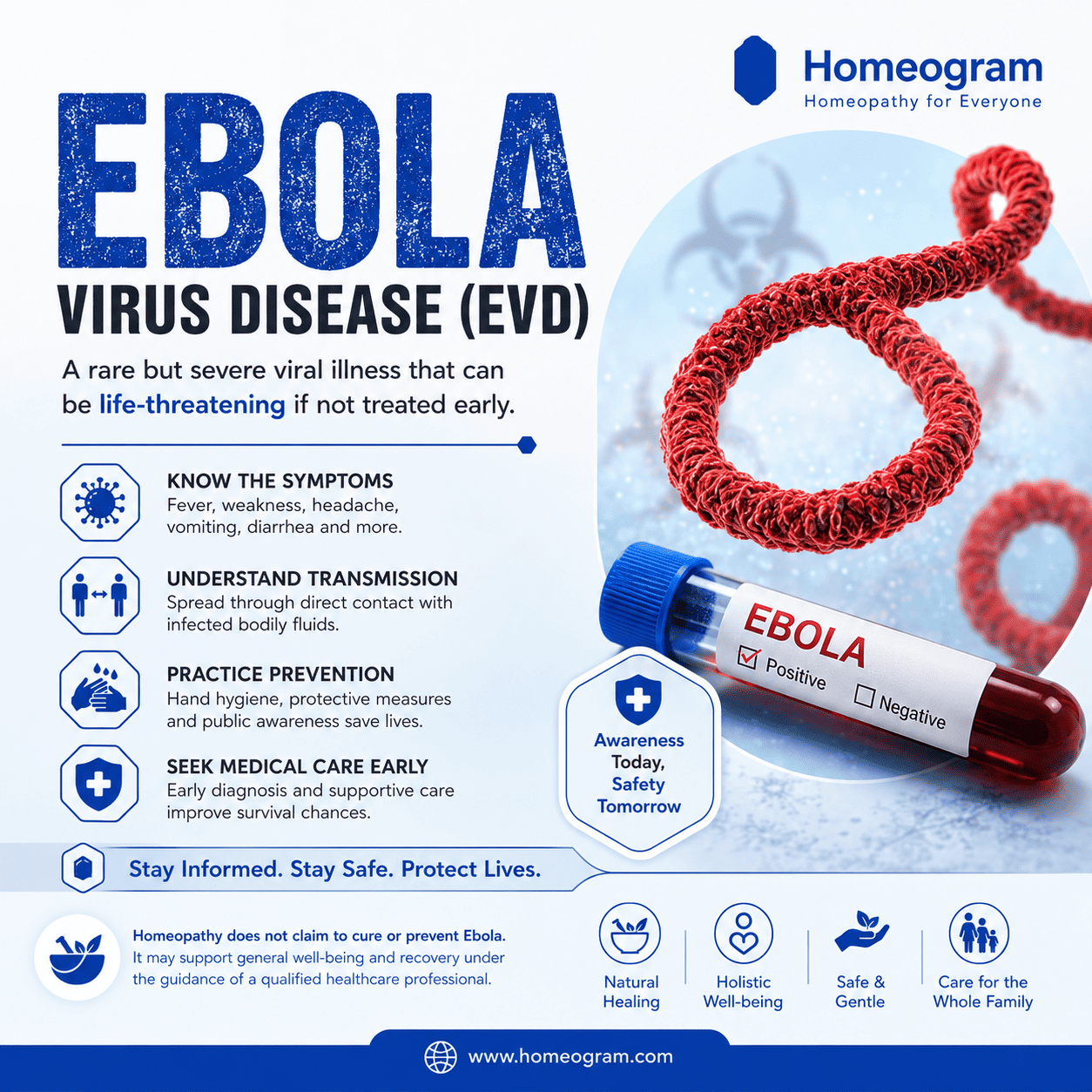
Ebola Virus Disease (EVD): Symptoms, Causes, Prevention and Homeopathic Perspective
What is Ebola?
Ebola Virus Disease (EVD) is a rare but severe and often life-threatening viral illness that affects humans and certain animals. The disease was first identified in 1976 near the Ebola River in the Democratic Republic of Congo, from which it derives its name. Ebola outbreaks mainly occur in Central and West Africa and require immediate public health intervention due to their high fatality rates.
Causes of Ebola
Ebola is caused by viruses belonging to the Ebolavirus group. Scientists believe the virus is initially transmitted to humans through contact with infected wild animals such as fruit bats, monkeys, chimpanzees, and other primates. Once introduced into humans, it can spread rapidly from person to person.
How Does Ebola Spread?
Ebola does not spread through the air like the common cold or influenza. The virus spreads through direct contact with:
- Blood of an infected person
- Vomit, diarrhea, saliva, sweat, urine, or semen
- Contaminated clothing, bedding, or medical equipment
- Infected animals or animal products
A person becomes contagious only after symptoms begin.
Symptoms of Ebola
Symptoms usually appear between 2 and 21 days after exposure, most commonly within 8–10 days. Early symptoms include:
- Sudden fever
- Severe weakness and fatigue
- Headache
- Muscle and joint pain
- Sore throat
As the disease progresses, patients may develop:
- Vomiting
- Diarrhea
- Abdominal pain
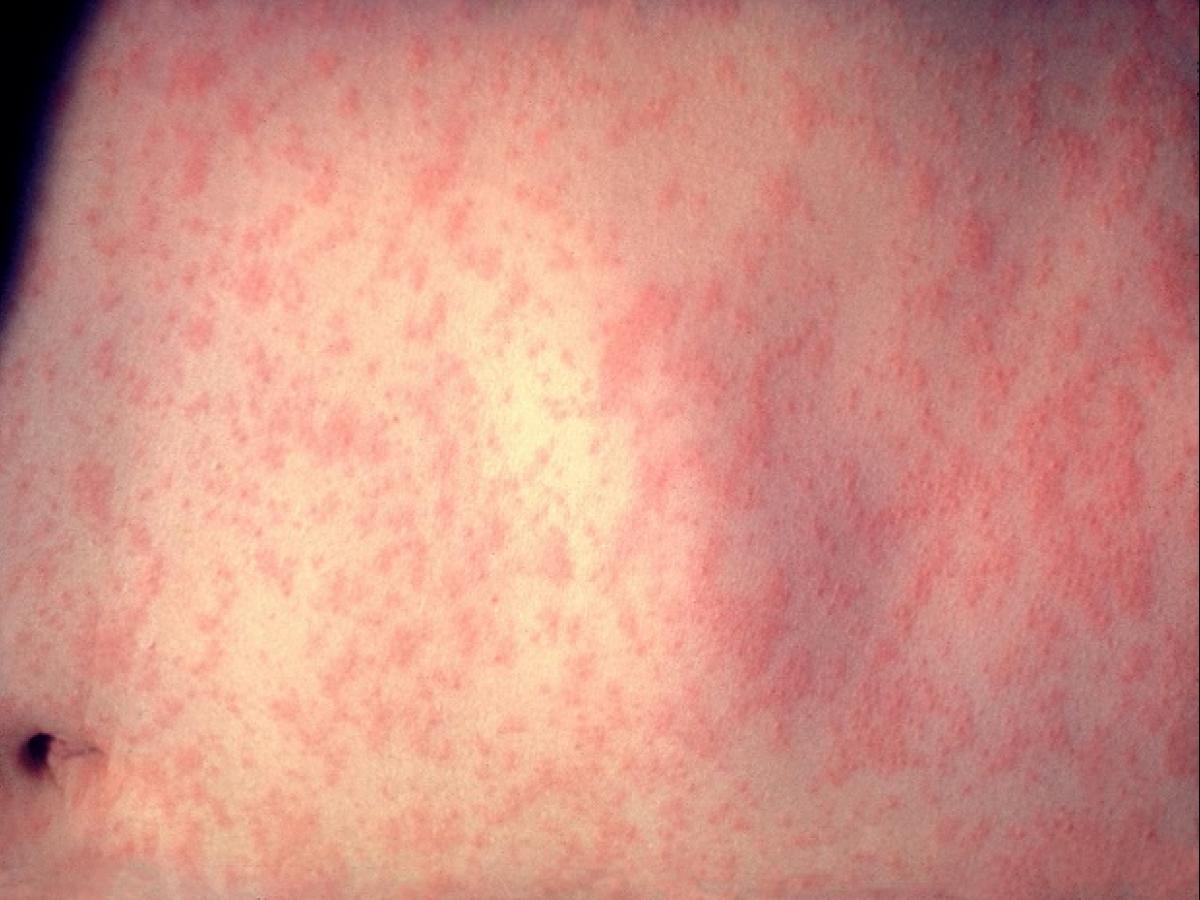
- Skin rash
- Liver and kidney dysfunction
- Internal or external bleeding in severe cases
Immediate medical attention is essential if Ebola is suspected.
Diagnosis
Healthcare professionals diagnose Ebola using specialized laboratory tests, including PCR testing and viral antigen detection. Early diagnosis helps improve patient management and outbreak control.
Treatment
There is no simple cure that can be taken at home. Treatment primarily involves:
- Intensive supportive care
- Intravenous fluids
- Electrolyte correction
- Oxygen support
- Treatment of secondary infections
Early medical intervention significantly improves survival rates.
Prevention
To reduce the risk of Ebola infection:
- Avoid contact with infected individuals.
- Practice strict hand hygiene.
- Avoid handling sick or dead wild animals.
- Use protective equipment in healthcare settings.
- Follow public health advisories during outbreaks.
Recent Ebola Situation (2026)
In 2026, a significant Ebola outbreak caused by the Bundibugyo strain has affected parts of the Democratic Republic of Congo and Uganda. International health agencies, including the World Health Organization (WHO), are actively working to contain the spread through surveillance, treatment centers, and community awareness programs.
Homeopathic Perspective
Homeopathy does not claim to cure or prevent Ebola. Ebola is a medical emergency requiring immediate hospitalization and specialized medical care. However, homeopathy may be considered only as a complementary approach for general supportive care during recovery under the supervision of qualified healthcare professionals.
Patients with suspected Ebola symptoms should seek urgent medical attention and should never rely solely on alternative therapies.
Conclusion
Ebola remains one of the world’s most serious infectious diseases. Awareness, early diagnosis, prompt medical treatment, and adherence to public health measures are the most effective ways to prevent transmission and save lives. Staying informed about outbreaks and following official health guidance can help protect individuals and communities from this dangerous disease.


- admin |
- June 10, 2026
Recent Posts